
AI and the Art of Letting Go: Trusting the Machine (and Yourself)
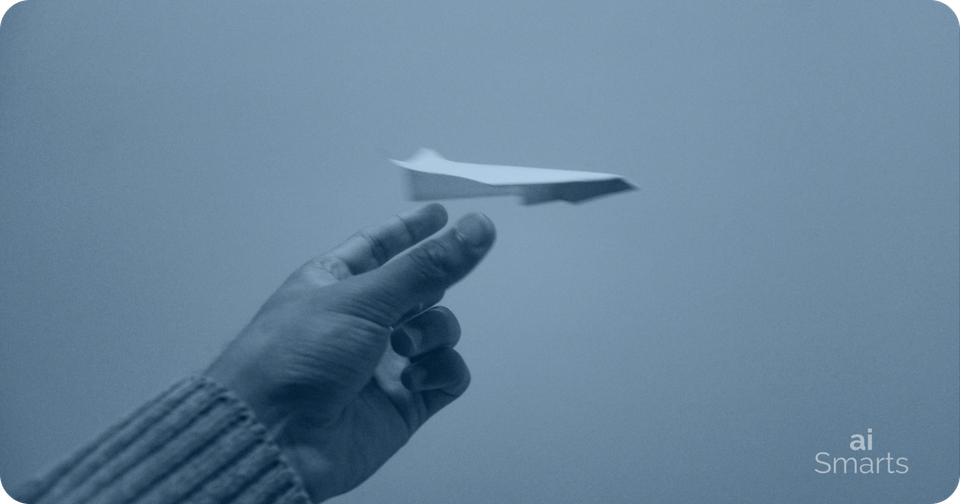
There’s a fundamental human impulse to control. From the moment we learn to tie our shoes to the intricate systems we build in our businesses, we seek to exert influence, to predict outcomes, to ensure things go exactly as planned. (My kids, for example, are convinced they can control the weather with sheer willpower. Bless their hearts.) This desire for control, while often a source of strength and accomplishment, can also become a subtle cage, holding us back from new possibilities. And nowhere is this tension more apparent than in our relationship with Artificial Intelligence.
We’ve created this incredibly powerful tool, capable of processing information and performing tasks at speeds and scales unimaginable to us. Yet the very act of handing over control, of truly trusting the machine, can feel deeply unsettling. (It’s like handing your car keys to a teenager for the first time. You know they can drive, but…)
It’s a paradox: to fully leverage AI’s potential, we must learn the art of letting go. This isn’t about blind faith or abdication of responsibility. It’s about cultivating an informed trust. A nuanced understanding of when to step back and allow the algorithms to work, and when our unique human judgment, creativity, and ethical compass are absolutely indispensable. Just as we learn to trust a new colleague with a critical task, or a new car with our safety, our journey with AI requires a similar, often uncomfortable, recalibration of trust. And in that process of trusting the machine, we often discover a deeper trust in ourselves and our evolving role in a technologically advanced world.
The Human Resistance to Letting Go: Why We Cling to Control
Why is it so hard to let go? Part of it stems from the inherent mystery of AI. For many, it still feels like a "black box" – a system that produces results without fully revealing its inner workings. This lack of transparency can breed anxiety and distrust. If we don’t understand how it arrived at a conclusion, how can we truly trust that conclusion? This fear of the unknown is a powerful psychological barrier.
Then there’s the deeper, more existential concern: the fear of losing our agency, our identity, our very purpose. If AI can write, analyze, and even create, what’s left for us? This concern, while understandable, often misinterprets the nature of human-AI collaboration. It’s not about AI replacing us, but about it augmenting our capabilities, freeing us from the mundane so we can focus on the truly human aspects of work and life. Yet, the subconscious fear that AI will diminish our roles or make us redundant can lead us to cling to tasks, even inefficient ones, simply because they validate our sense of usefulness. (I once spent an hour formatting a spreadsheet by hand, just because I could. Was it the best use of my time? Absolutely not.)
And let’s not forget the insidious pull of perfectionism. As we explored in "The AI Learning Curve," our desire for flawless outcomes can often prevent us from even starting. With AI, this manifests as a reluctance to use a tool unless it’s absolutely perfect, or a refusal to delegate a task because "if I don’t do it, it won’t be done right." This mentality, while rooted in a desire for quality, ultimately hinders our ability to leverage AI effectively. It keeps us trapped in manual processes, even when an AI-assisted, "good enough" solution could deliver significant value and free up our time for higher-level thinking.
So what? Your desire for control might be holding you back from AI's true power.
Try this → Identify one task you insist on doing yourself. Ask yourself: what's the worst that could happen if I let AI handle 80% of it?
The Art of Trusting the Machine: A Practical Guide to Relinquishing Control (Wisely)
Learning to trust the machine isn’t a switch you flip; it’s a muscle you build. It requires intentionality, experimentation, and a willingness to step outside your comfort zone. Here’s a practical guide to cultivating that informed trust:
- Start Small, Build Trust Iteratively: Don’t begin by handing over your most critical business decisions to an AI. (That’s like giving your teenager the keys to the Ferrari on their first driving lesson.) Instead, identify low-stakes tasks where AI can assist. Perhaps it’s scheduling meetings, summarizing long documents, or generating initial drafts of emails (ChatGPT is great for this). As you see AI consistently deliver value in these smaller areas, your confidence will grow, making it easier to trust it with more significant responsibilities.
- Understand AI Capabilities and Limitations: Informed trust is not blind trust. Take the time to understand what the AI tool you’re using can and cannot do. Read the documentation, experiment with its features, and push its boundaries. Knowing its strengths and weaknesses allows you to set realistic expectations and identify when human oversight is absolutely necessary. It demystifies the "black box" and transforms it into a powerful, albeit specialized, tool.
- Focus on Human-AI Collaboration: The most impactful applications of AI aren’t about machines replacing humans, but about humans and machines collaborating. AI excels at processing vast amounts of data, identifying patterns, and performing repetitive tasks with speed and accuracy. Humans bring creativity, critical thinking, emotional intelligence, ethical reasoning, and the ability to understand nuanced context. When you view AI as a partner, leveraging its strengths to complement yours, you unlock a synergy that neither could achieve alone.
- Set Clear Boundaries and Oversight: Trusting the machine doesn’t mean abdicating responsibility. Implement clear checks and balances. Define when human intervention is necessary, especially for high-stakes decisions or tasks with ethical implications. Regularly review AI-generated outputs, provide feedback, and refine the system. This human-in-the-loop approach ensures accountability and continuous improvement.
- Embrace the "Good Enough" Principle: Sometimes, an AI-generated draft, even if imperfect, is a powerful starting point. It might not be exactly what you would have written, but it saves you the blank-page paralysis and provides a foundation to build upon. Learning to accept "good enough" from AI frees up your mental energy for the higher-order tasks of refining, adding your unique voice, and applying your strategic judgment.
So what? Trust isn't given, it's earned. And you earn it by starting small and understanding the rules of engagement.
Try this → Pick one low-stakes task. Use an AI tool (like Zapier or Make for automation, or ChatGPT for writing) to help you with it. Review the results. What did you learn about the AI's strengths and weaknesses?
Trusting Yourself in the AI Era: Redefining Value and Purpose
As we learn to trust the machine, a parallel and equally important journey unfolds: learning to trust ourselves in this evolving landscape. Our value and purpose are not diminished by AI; they are redefined. Our role shifts from manual execution to strategic oversight, from data entry to problem definition, from rote tasks to ethical stewardship.
This means cultivating new skills – not necessarily coding, but critical thinking, creativity, emotional intelligence, and the ability to ask the right questions. It’s about understanding how to prompt AI effectively, how to interpret its outputs, and how to integrate its insights into a broader human context. These are the uniquely human skills that AI cannot replicate, and they become increasingly valuable.
Moreover, the art of letting go of mundane tasks to AI is incredibly liberating. It frees up mental space, allowing us to engage in higher-value work, pursue creative endeavors, or simply enjoy more personal time. It’s about recognizing that our usefulness, our worth, is not solely tied to the tasks AI can perform. Our value lies in our unique human capacity for empathy, innovation, complex problem-solving, and building meaningful connections.
So what? Your value isn't in what you do, but in what you think and create.
Try this → Reflect on a recent task you automated. What did you do with the time you saved? How did it allow you to focus on something more impactful or enjoyable?
Conclusion: The Liberating Power of Informed Trust
Ultimately, AI and the art of letting go are deeply intertwined. It’s not about giving up control entirely, but about gaining a new kind of leverage and freedom. By learning to trust the machine, not blindly, but with informed understanding and strategic oversight, we empower ourselves to achieve more, to innovate faster, and to focus our precious human energy on what truly matters.
This journey of informed trust allows us to shed the overwhelm, to embrace the imperfections inherent in both human and machine learning, and to step confidently into a future where technology serves as a powerful extension of our capabilities. So, take that step. Experiment with delegating a task to AI. Discover the liberating power of this new partnership. At aiSmarts, we’re here to guide you through this psychological and practical shift, helping you navigate the exciting intersection of human potential and artificial intelligence. (And maybe, just maybe, you’ll even find a little more time for that perfectly timed coffee.)